
Public system
CHRR, CSBs, dispensariesThe Amboanato Regional Referral Hospital, basic health centres (CSB I and CSB II) in each commune and vertical programmes (malaria, vaccinations, nutrition).
Examples: CHRR · CSB II · CSB I · EPI
The health system in Anosy combines public provision, the private and faith-based sector, community action and traditional medicine. A complex but essential combination to cover a vast and unevenly urbanised territory.
The Amboanato Regional Referral Hospital, basic health centres (CSB I and CSB II) in each commune and vertical programmes (malaria, vaccinations, nutrition).
Examples: CHRR · CSB II · CSB I · EPI
Centre Médical de Taolagnaro, Rio Tinto Private Hospital, Hôpital Loterana Manambaro (SALFA), private doctors and pharmacies.
Examples: CMT · Manambaro SALFA · Rio Tinto · clinics
Community agents (CA), health committees (CoSAN), associations and NGOs (SEED Madagascar, ASOS, Asity) that spread prevention in villages.
Examples: CA · CoSAN · local NGOs · peer educators
Ombiasy (diviner-healers), traditional birth attendants, plant-based remedies — the first port of call for care for many rural people.
Examples: Ombiasy · traditional birth attendants · plants · sikidy
Each card presents a facility or programme, its practical services and social impact, with a link to a verifiable source (WHO, UNICEF, INSTAT, Institut Pasteur, SEED Madagascar, SALFA).
The region's main public facility, the Amboanato CHRR is the pivot of the health system in Anosy.
The Amboanato Regional Referral Hospital (CHRR) is the public referral facility for the three districts of the Anosy Region (Tôlanaro, Amboasary-Sud, Betroka). According to SEED Madagascar's assessment of maternal and child health in Fort-Dauphin, the CHRR is one of the three public facilities in the urban commune, alongside a CSB I at Bazary-be and a CSB II at Ambinanibe. Serious cases needing specialist care are referred to the CHRR: surgery, complicated births, emergencies, paediatrics. The hospital faces the structural challenges of the Malagasy system: chronic underfunding (health spending per person in Madagascar is one of the lowest in the world), staff shortages, ageing equipment.
The main point of access to hospital care for some 800,000 people in the Anosy region, on the front line against malaria, malnutrition and obstetric complications.
Founded in 1954 by an American Lutheran mission, Manambaro hospital remains a pillar of rural health in Anosy.
Hôpital Loterana Manambaro, run by the SALFA network (Sampan'Asa Loterana momba ny Fahasalamana, the health arm of the Malagasy Lutheran Church), was founded in 1954 by an American Lutheran mission. Located about 24 km west of Tôlanaro, in an isolated area where electricity and running water are intermittent, it plays a crucial role for the surrounding rural population, according to SALFA. The team includes three doctors, two midwives and around fifteen nurses and support staff. Dr Heuric — one of the few paediatric surgeons trained in the Pan-African Academy of Christian Surgeons programme — and his wife Dr Mireille (internal medicine, HIV specialist) put the hospital back on its feet after decades of decline.
An essential resource for rural patients in the south-east, a recognised complement to the public network. Supported by international partners (Global Health Ministries, ELCA).
Source: SALFA · Global Health Ministries (GHM) · SEED Madagascar
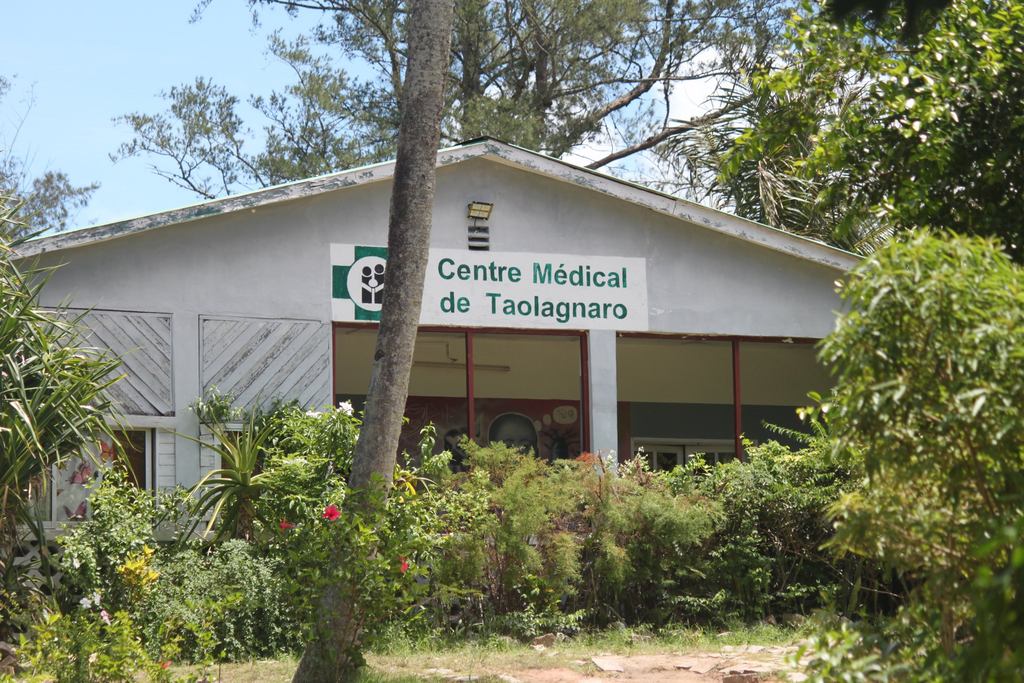
One of Fort-Dauphin's main private facilities, with an on-call doctor available at all times.
According to its official website, the Centre Médical de Taolagnaro (CMT) has four doctors available from 8 am to 12 noon and 2 pm to 5 pm, with an on-call doctor reachable 24/7. The centre includes a continuously open dispensary giving access to care and medicines. CMT is part of a private ecosystem in Fort-Dauphin documented by SEED Madagascar: four clinics and about seven practising private doctors, most of whom see patients at home and refer serious cases either to the public hospital or to the private Manambaro hospital for invasive tests or complications.
A structured private offer for the urban population, company employees (especially in mining) and international visitors.
Source: Centre Médical de Taolagnaro (cmdt.mg) · SEED Madagascar

The first level of the health system, CSBs are the local network that most people in Anosy turn to.
Madagascar's public health system relies on two levels of basic health centres: CSB I (staffed by paramedics) and CSB II (with a doctor). According to SEED Madagascar, the government should in theory provide at least one CSB per commune. Urban Fort-Dauphin has a CSB I at Bazary-be and a CSB II at Ambinanibe, plus the Amboanato CHRR. Nationally, Wikipedia lists more than 2,600 medical facilities for 125 hospitals — about 35% of Malagasy people live more than 10 km from a health centre, a situation particularly marked in rural Anosy.
The entry point to the system for most families, especially in rural areas. Performance depends on medicine supplies and staff stability.
Source: SEED Madagascar · Wikipedia (medical facilities in Madagascar)
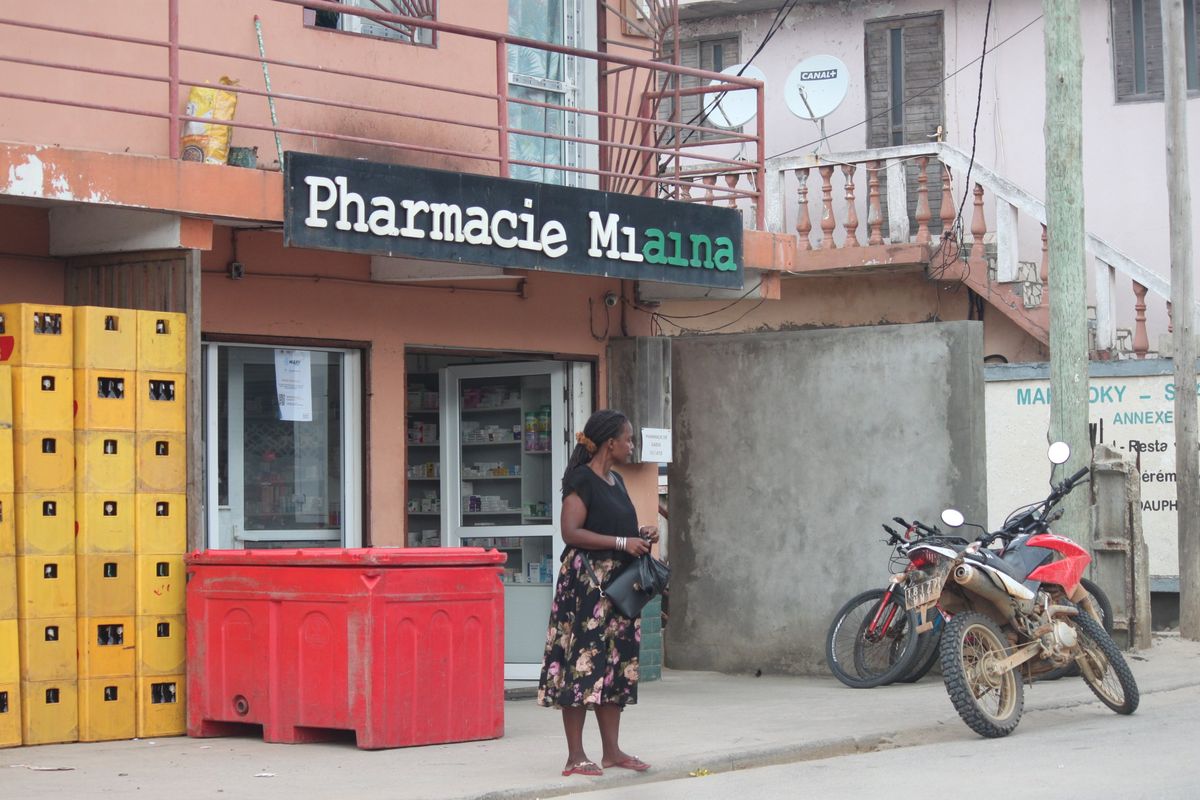
This week the on-duty pharmacy is Pharmacie Miaina, until Saturday 28/11 at noon; Pharmacie Levintsy will then take over.
In Fort-Dauphin, four pharmacies take turns to be on duty: Pharmacie Miaina, Pharmacie Levintsy, Pharmacie Kanacia and Pharmacie Endor. Each turn lasts a week, from Saturday noon to the following Saturday noon, so that a pharmacy is open at night, at weekends and on public holidays. Pharmacies display the name of the on-duty pharmacy on their door: if in doubt (public holiday, last-minute change), go by that notice. Essential generic medicines (antimalarials, antibiotics, paracetamol, oral rehydration salts) are generally available, but some brand-name products may be out of stock and need to be ordered from Antananarivo.
A key link in access to care, but cost and availability remain major obstacles for the poorest rural households.
Source: Rota provided by Fort-Dauphin's pharmacies · Fort-Dauphin Portal

Maternal and infant mortality remains high in Madagascar — Anosy is among the regions where access to quality obstetric care is hardest.
According to UNICEF data summarised by Bealy Medical (2024), infant mortality in Madagascar is estimated at about 38 deaths per 1,000 live births, nearly 60% of them neonatal. SEED Madagascar's assessment (2011-2012) of maternal health in Fort-Dauphin reported particularly worrying figures in the Anosy Region, with 20% of deaths of women aged 15 to 24 linked to pregnancy or childbirth. The Ministry of Public Health, UNICEF, UNFPA and partners such as SEED Madagascar (Votsira, Ready for Rights, Mitao projects) are working to improve access to antenatal care (ANC), family planning and assisted births.
A critical issue for regional public health. Progress thanks to UNICEF/UNFPA campaigns, but wide geographical inequalities between urban Fort-Dauphin and rural Anosy.
Source: UNICEF Madagascar · SEED Madagascar (Maternal & Child Health) · Bealy Medical

According to UNICEF, Fort-Dauphin alone accounts for more than half of the malaria cases in the Anosy region.
Malaria is one of the main public health problems in Anosy. Institut Pasteur de Madagascar describes a “southern” pattern for the region, where transmission is seasonal (less than four months a year, sometimes two in the far south), mainly by Anopheles arabiensis and An. funestus. UNICEF notes that Fort-Dauphin alone accounts for more than half of the malaria cases recorded in the Anosy region. Nationally, Madagascar recorded about 2.8 million cases in 2024 according to the Ministry of Public Health, a sharp rise on previous years — linked in particular to extreme weather events (cyclones, floods) that multiply breeding sites.
A major cause of fever, hospitalisation and death, especially among children under 5 and pregnant women. Growing pressure with climate change.
Source: UNICEF Madagascar · Institut Pasteur Madagascar · Ministry of Public Health

Anosy is one of the southern regions hit by kere — recurrent “famine” linked to drought and climate shocks.
According to UNICEF, eight of the sixteen districts in the three southern regions (Anosy, Androy, Atsimo Andrefana) have been affected by recurrent droughts since 2015, worsened by El Niño episodes. The direct consequence is severe food insecurity and acute malnutrition among children under five. In 2021, UNICEF and WFP warned that acute malnutrition among children risked quadrupling in the south, affecting half a million children, 110,000 of them severely. Cyclone Freddy in February 2023 made the situation worse still, bringing to 115,000 the number of children needing treatment for acute malnutrition that year in the Deep South-East. The Ministry of Public Health, ONN and UNICEF rolled out the PECMAS programme (treatment of severe acute malnutrition) in 208 health centres in the South, 100% of the area.
Irreversible effects on children's growth. A chronic crisis that requires linking health, food security, water and sanitation and support for livelihoods.
Source: UNICEF Madagascar · WFP · SEED Madagascar · ONN Madagascar
Disclaimer: This page gives a summary overview of the health system in Anosy based on public sources (WHO, UNICEF, INSTAT, Institut Pasteur de Madagascar, SEED Madagascar, SALFA, Ministry of Public Health). It is in no way a substitute for professional medical advice. In an emergency, contact the Amboanato CHRR, a medical centre's 24/7 service or local emergency services directly.
Locate the main facilities and health hotspots of the Anosy Region. Positions are approximate — always check exact contact details and opening hours locally before travelling.
Alongside the supply of care, some structural obstacles limit access to health for many people in Anosy. Understanding them helps direct collective action better.
About 35% of Malagasy people live more than 10 km from a health facility, according to Wikipedia. In rural Anosy, distances and road conditions make this isolation worse.
CSB network · transport
Chronic shortage of human resources (doctors, midwives, nurses), especially in rural areas — a challenge highlighted by the WHO 2022-2023 biennial report.
MSP · partners
The Malagasy health system is among the least funded in the world, with about USD 22 per person per year cited by SEED Madagascar (WHO, 2014). The cost of care remains a major obstacle.
State · households
Malaria, respiratory infections, diarrhoea, tuberculosis and HIV still weigh heavily. Acute malnutrition multiplies the death rate from these illnesses in children.
PNLP · CSB · UNICEF
Only 12 to 14% of the population has access to improved sanitation according to WHO (2014, cited by SEED). Open defecation remains common in rural Anosy.
WASH · NGOs
Cyclones (Freddy 2023), floods, prolonged droughts: these events damage infrastructure, multiply mosquito breeding sites and worsen malnutrition.
BNGRC · partners
The rainy and cyclone season (Dec–Mar) coincides with the peak of malaria and diarrhoea; the lean season (June– September) concentrates nutritional risks.
Ministry, UN agencies, Institut Pasteur, faith-based hospitals, NGOs and community agents: a dense ecosystem that pools expertise and resources to reduce illness.
National supervising ministry, responsible for the functioning of the CHRR, CSBs and vertical programmes (PNLP malaria, EPI vaccinations, PECMAS nutrition). Represented locally by the Anosy Regional Directorate of Public Health (DRSP).
The World Health Organization's country office, providing technical support on health priorities (universal health coverage, epidemiological surveillance, epidemic response).
A central player in maternal and child health, vaccination, nutrition (PECMAS programme in 208 CSBs in the South) and water and sanitation. Stronger presence in Anosy since the drought crises.
The World Food Programme and the National Nutrition Office coordinate food aid during the lean season and monitoring of the IPC (Integrated Food Security Phase Classification).
A reference for research and surveillance of infectious diseases: malaria, plague, tropical diseases. Entomological studies to adapt vector control to regional patterns.
Network of Lutheran hospitals and dispensaries, including Manambaro hospital 24 km from Fort-Dauphin, founded in 1954. A major player in rural health in western Anosy.
British-Malagasy NGO based in Fort-Dauphin, twenty years of work on community health (Mitao, Votsira, Ready for Rights projects), water and sanitation (Magnampy) and family planning.
Community agents (CA) and health committees (CoSAN) at fokontany level — multipliers for prevention, awareness-raising and campaigns (vaccinations, mosquito-net distributions).
A few simple pointers to protect your health in Anosy — drawn from WHO recommendations, travel advice and the experience of field workers.
From the CHRR to bush CSBs, from ombiasy to NGOs, health in Anosy relies on an ecosystem in which every player counts. Get informed, prevent, make sure your loved ones are followed up: it is the first step towards a healthier territory.