
Tangible heritage
Fort, tombs, standing stonesFort Flacourt and its museum, Antanosy kibory and standing stones, Antandroy fanesy tombs, crafts: the visible traces of Anosy's history.
Examples: Fort Flacourt · kibory · fanesy · crafts
Living heritage · Anosy
Antanosy, Antandroy and Bara: from savatsy to standing stones, from fanesy tombs to the kilalaky dance, discover the cultures of the three peoples of the Anosy Region.
Anosy's heritage combines inherited monuments, oral knowledge, cyclical rites and meaningful landscapes. Four complementary dimensions that shape Antanosy identity.
Fort Flacourt and its museum, Antanosy kibory and standing stones, Antandroy fanesy tombs, crafts: the visible traces of Anosy's history.
Examples: Fort Flacourt · kibory · fanesy · crafts
Tanosy dialect, sarandra song, kabosy, marovany, lokanga, the Bara kilalaky dance: everything passed on by word of mouth from generation to generation.
Examples: Tanosy · sarandra · kabosy · kilalaky
Savatsy (circumcision), funerals and ancestor worship (razana), bilo healing rites and fady taboos structure the lives of Antanosy, Antandroy and Bara families.
Examples: Savatsy · razana · bilo · fady
Forests and springs protected by fady, the radiated tortoise that the Antandroy must not kill, Anosy landscapes steeped in the memory of the ancestors.
Examples: Sacred forests · springs · sokake
Each card presents a tangible or intangible heritage item, its practical uses and its social role, with a link to a verifiable source (Wikipedia, academic work, press, local stakeholders).

Fort-Dauphin was founded in 1643 on an Antanosy village, Taolankarana, by the French East India Company.
According to Wikipedia (Fort-Dauphin), the town was founded in 1643 on the Antanosy village of Taolankarana by the French East India Company, which built a fort there named in honour of the Dauphin, the future Louis XIV. The fort now bears the name of Étienne de Flacourt, governor of the trading post and author of the “Histoire de la grande isle Madagascar” (1658), one of the first written descriptions of Anosy's societies and its Zafiraminia kings. The remains lie within a military compound and house a small museum on the history of the region.
The founding site of Fort-Dauphin's urban history, useful to schoolchildren, researchers and visitors.

Savatsy, the circumcision of boys, is practised by all Malagasy people: in Anosy, the Antanosy, the Antandroy and the Bara each celebrate it according to their own customs.
Savatsy, the circumcision ceremony for boys, is a rite common to all Malagasy people; in the Anosy Region it is celebrated by the Antanosy, the Antandroy and the Bara. Anthropologist Jean-Jacques Rabenirina devoted a thesis to it for the Antanosy (“Savatsy ou cérémonie de la circoncision chez les Antanosy”, 1994, then Université Bordeaux 2, 1998), and historian Jacqueline Ravelomanana (University of Antananarivo) cites Antandroy circumcision among the island's great rituals. The ceremony brings the extended family together around the elders; a zebu is generally sacrificed on this occasion, as at a birth, marriage or death. Among both the Antandroy and the Bara, untreated cotton thread called fole velo (“living thread”) is used in circumcision rites. Circumcisions take place in the cool season, reputed to aid healing; more and more families now entrust them to a doctor.
A major moment in family life linking the child to his lineage and ancestors.

The Antanosy bury their dead far from the village, in a collective tomb, the kibory, and raise standing stones in their memory.
Among the Antanosy, the deceased is carried far from the village to be buried in a kibory, a collective tomb where no one will disturb them. So that everyone remembers them, a standing stone is raised: it is believed to hold the presence of the spirit of the deceased and may be honoured to ask for blessing and protection. Some of these stones reach about 6 metres, according to Wikipedia. Before the burial, a funeral wake is led with the sarandra song. The old cemeteries of the Zafiraminia royal dynasty bear well-known names: Enosiavaratse (Manarivo), Enosy atsimo (Andromira) and Samby Anosy (Ifarantsa).
These places are sacred: do not approach or photograph them without the agreement of the family or the elders.

The Antandroy, “people of the land of thorns”, live in Fort-Dauphin's hinterland; their great tombs, the fanesy, are among the most remarkable on the island.
According to the Rough Guide, the Antandroy (“people of the land of thorns”) live in Fort-Dauphin's hinterland, with the closely related Antanosy making up a large part of the town's population. Their tombs, called fanesy (“your eternal home”), are large rectangular monuments decorated with colourful paintings and tall standing stones representing man and woman; the skulls of zebu sacrificed at the funeral are placed on them to show the wealth of the deceased (Wikipedia). Zebu herding is the main activity; maize, sweet potato, cassava, zebu milk and curds often replace rice. Only women weave: they spin cotton on a spindle rolled against the thigh to make lamba. Among the Antandroy, it is fady (taboo) to kill the radiated tortoise.
A southern culture very present in Anosy, linked to that of the Antanosy by history, trade and marriage.
Source: Wikipedia (Antandroy) · Rough Guides (Southern Madagascar)

Betroka district, in the north of Anosy, is the land of the Bara, Madagascar's foremost zebu-herding people.
According to Wikipedia, the Bara live mainly in the Ihosy–Betroka area; Betroka district, one of the three districts of the Anosy Region, is populated by the Bara. Raising and selling zebu is their main activity. Courage is at the heart of the male ideal. The kilalaky, now the most popular line dance, was born among the Bara; the lokanga, a three-string fiddle, is their most typical instrument. Agreements were traditionally sealed by a blood pact, the fatidra. The Bara bury their dead in mountain caves or, failing that, in stone-covered graves far from the village; relatives cut their hair as a sign of mourning. Zebu rustling (dahalo), once a rite of passage, is now illegal and the work of armed gangs.
Bara traditions in Betroka district are an integral part of the Anosy Region's heritage.

Kabosy, marovany, lokanga, polyphonic songs and the kilalaky dance set the rhythm of the region's festivities.
The kabosy, a small guitar also called mandoliny, is played even in the streets of Fort-Dauphin. Among the Antandroy, Wikipedia describes the marovany (a box zither made from pine boards and bicycle cables), the mandolina or gitara (similar to the kabosy, with fishing-line strings), the lokanga (a fiddle with a gourd resonator) and richly harmonised songs; traditional dances are performed with the spear, to the sound of whistles and flutes. Among the Bara, the kilalaky line dance has become the most popular dance, and the karitaky imitates the kick of a zebu. Among the Antanosy, the funeral wake is accompanied by the sarandra song.
A lively scene that brings family celebrations and Fort-Dauphin festivals such as Sambaraha to life.
Source: Wikipedia (Antandroy · Bara people) · Wikimedia Commons · Jacaranda

Fady are taboos inherited from the ancestors; they vary from one village, clan or family to another.
A fady is a taboo passed down by the ancestors: a food, a day, a gesture or a place. Documented examples in the region are numerous. Among the Antandroy, it is generally forbidden to kill the radiated tortoise (sokake), it is fady for women to milk zebu, and the name of a dead king is not spoken. Among the Bara, it is forbidden to step over a seated or lying person, or to serve someone with a utensil already used for another person. Mongabay has shown that these taboos also protect forests, species and springs. For a visitor, the rule is simple: ask the elders or your guide before entering an unfamiliar place.
Respecting fady means respecting the families who welcome you.
Source: Wikipedia (Antandroy · Bara people) · Mongabay (2014)

Bilo is a rite in which, through dance and music, the spirits are called upon to heal or resolve a problem.
Among the Antanosy, the possession cult called bilo calls on the spirits through dance and music to obtain healing or resolve a personal or collective problem. Among the Antandroy, bilo refers to the trance during which the ancestors can possess the living; mpisoro diviners are respected authorities. Among the Bara, the ombiasy, the village diviner and sage, leads healing rituals (bilo or salamanga) and ties the fole velo around the wrist for protection.
A practice that is still alive, to be approached with respect: you do not attend a bilo without being invited.
Source: Jacaranda (Antanosy) · Wikipedia (Antandroy · Bara people)
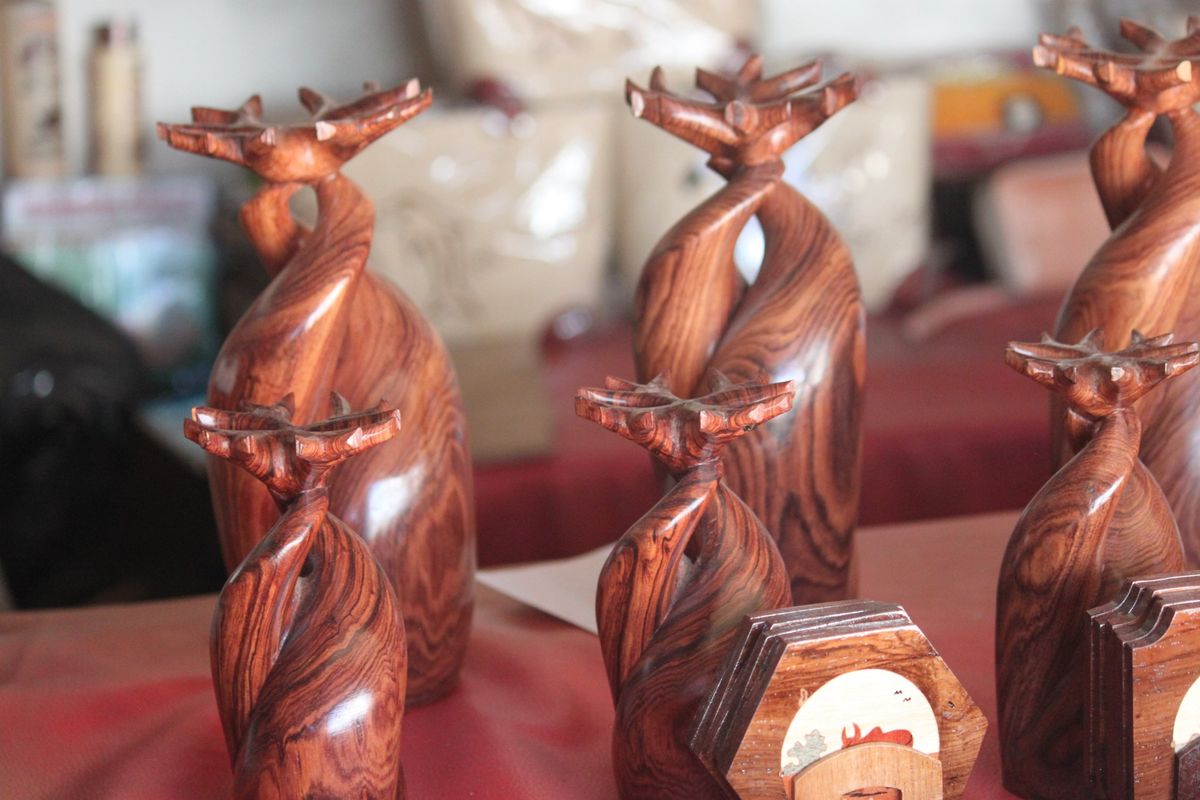
Wood carving and marquetry, basketry, lamba weaving, blacksmithing: Anosy's craftspeople carry on skills passed down within families.
The Antanosy are reputed to be skilled carpenters and blacksmiths (Wikipedia). Women weave baskets and the lamba, the traditional cloth, while helping with the crops (Jacaranda). Metalworking is attested in Anosy from the 13th century, and leatherwork spread there in the 19th century. In Fort-Dauphin today, craft shops sell polished wood carvings, marquetry boxes and basketry. Before buying an object made of precious wood, ask where it comes from: the harvesting and export of certain species are strictly regulated in Madagascar.
A significant extra income, especially for women, and techniques to pass on.

The Antanosy, “those of the island”, speak Tanosy, a dialect of Malagasy.
The name Antanosy means “those of the island”. Their speech, Tanosy (or Antanosy), is a dialect of Malagasy, a Malayo-Polynesian language; Wikipedia estimated the number of speakers at 350,000 in 2002. Antanosy society is divided into regional groups (Antavaratra towards Manantenina, Antambolo towards Ranomafana, Antatsimo from Ranopiso to the Mandrare…) and, in central Anosy alone, into some thirty village clans. Family stories preserve the memory of the Zafiraminia kings and the ancestor Raminia. Recordings of Antanosy music have been published (collected by Victor Randrianary, 1997).
A central vehicle of Antanosy identity, to be passed on to the young.
Disclaimer: This page gives a summary overview of Anosy's cultural heritage based on public sources (Wikipedia, academic work, press, local stakeholders). Practices vary between lineages and villages. Before visiting a sacred site or taking part in a ceremony, it is essential to ask the ray amandreny (elders) for advice and to respect the fady rules scrupulously.
Anosy's rich heritage faces economic, demographic, environmental and tourism pressures. Identifying them helps protect what is passed on.
Rural exodus and the appeal of cultures from elsewhere weaken the oral transmission of knowledge (stories, songs, customary rules) to young people.
Elders · schools
Funerals and savatsy require zebu, meals and several days of hospitality: a heavy burden for many families.
Families · diaspora
Fort Flacourt and its museum lack resources. Tombs and standing stones are still poorly inventoried and poorly protected.
Ministry of Culture · NGOs
Tombs visited without a guide, ceremonies photographed without consent: poorly managed tourism can hurt communities.
Tourism · guides
Antanosy, Antandroy and Bara genealogies, songs and stories are still little collected; open archiving has only just begun.
Universities · radio
Droughts and cyclones hit herds and harvests, and therefore families' means to hold ceremonies.
BNGRC · communities
The cool season (May–August) is circumcision (savatsy) season; the end of the year is marked in Fort-Dauphin by the Sambaraha Festival.
Elders, ombiasy, the ministry, the Region, universities, radio stations, associations and artists: a dense ecosystem that keeps traditions alive while opening them up to the modern world.
National supervisor of cultural policy, protection of historic monuments and the heritage inventory.
Regional authority; it supports Fort-Dauphin's major cultural events, such as the Sambaraha Festival.
Keepers of genealogies, fady rules and funeral customs: the first point of reference for any customary question.
Diviner-healers and religious authorities in villages; they lead healing rites (bilo) and support families.
Historical, archaeological and anthropological work on Anosy and the South (theses on savatsy, excavations in the Efaho valley, studies of Antandroy tombs).
Programmes in dialect, tales and music of the South: an important relay for transmission.
Local associations that organise festivities and festivals, such as Hoavign'Anôsy, which organises the Sambaraha Festival.
Kabosy, marovany and lokanga players, dancers, carvers, basket-weavers and weavers: the living bearers of heritage.
A few simple pointers for experiencing Anosy's heritage with respect — drawn from the advice of the ray amandreny, local guides and cultural operators.
From Fort Flacourt to the standing stones, from the kabosy to the kilalaky dance, Anosy's heritage lives on thanks to those who practise and respect it. Discover it, support its guardians and pass it on in turn.