Education system · Anosy

Education in Anosy, from bush EPPs to university

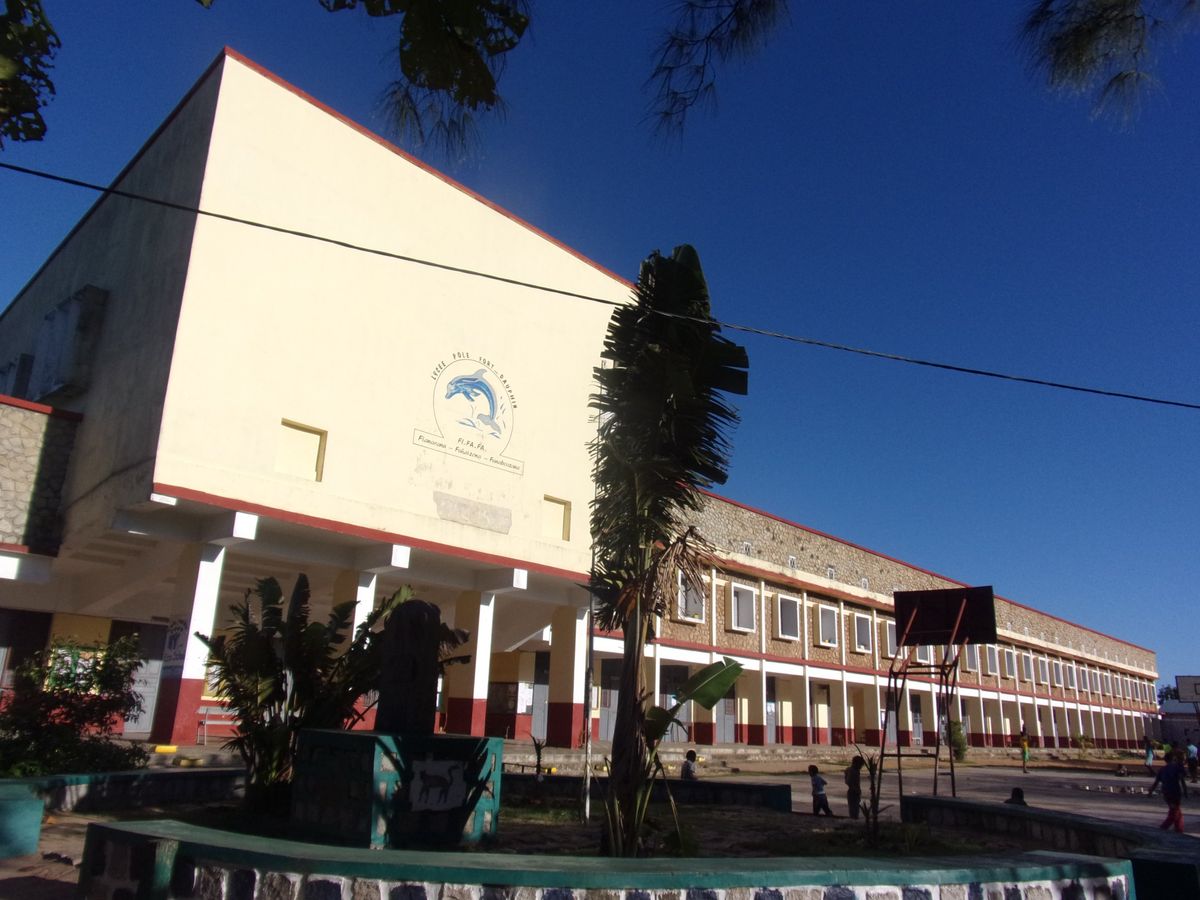
From pre-school to higher education, schooling in Fort-Dauphin and the whole Anosy Region combines a public network under pressure (794 EPP, 68 CEG, a single public higher-education institute), well-established private and faith schools, and constant support from NGOs and international donors.

794 state primary schools in the Anosy Region
68 public lower secondary schools (CEG)
27.4% rural literacy in Anosy
1 regional public higher-education institute (IES Anôsy)
Overview

Four pillars
structure the education system in Anosy

As everywhere in Madagascar, schooling in Anosy rests on a fragile balance between the State, the private/faith-based sector, village communities and international NGOs. None of these pillars alone could meet the needs of a region of nearly 800,000 people.

Public system

EPP, CEG, high schools, IES

National network run by MEN and DREN Anosy: state primary schools (EPP), lower secondary schools (CEG), high schools, the Higher Education Institute of Anôsy, officially free, staffed by civil servants and FRAM teachers.

Examples: 794 EPP · 68 CEG · IES Anôsy · CNTEMAD

Private & faith-based

Catholic, Lutheran, AEFE

Schools run by religious congregations (Catholic, Lutheran, Adventist) or private operators. Includes the AEFE-accredited École Primaire Française — often valued for the quality of supervision.

Examples: Sacré-Cœur · Ambohimazava · St-Vincent · EPF

Community

Village schools, literacy

Schools set up and supported by village communities (fokontany) to make up for the lack of an EPP — about a quarter of primary schools. Literacy centres for adults and young drop-outs.

Examples: Satellite schools · Adult literacy · Pre-school

NGOs & cooperation

WFP, SEED, UNICEF

WFP school canteens, SEED Madagascar projects (Stelo, Magnampy), UNICEF, Aide & Action — essential complements to the public system in nutrition, textbooks and teacher training.

Examples: WFP · SEED Stelo · UNICEF · A&A

Schools & programmes

8 key points
about the education system in Anosy

Each card presents a school or programme, its practical services and social impact, with a link to a verifiable source (Anôsy Region, MEN, MESUPRES, World Bank, UNESCO, SEED Madagascar, AEFE).

AEFE — France
French school abroad

École Primaire Française de Fort-Dauphin

The only French school in Fort-Dauphin, following the official French National Education curriculum.

The École Primaire Française de Fort-Dauphin (PO Box 187 614) is accredited by AEFE (Agency for French Education Abroad). It teaches from pre-school to CM2, plus the 6ème, 5ème and 3ème classes. Indicative fees range from about €680 to €1,080 a year (subject to change; to be confirmed with the school). It takes the children of expatriate families (notably linked to QMM/Rio Tinto, international NGOs and the consular corps), as well as Malagasy families wanting recognised French-language schooling. The school calendar follows France's, sometimes adjusted for the southern-hemisphere climate.

Lead(s) Parents' association — AEFE-accredited school
Scale Pre-school, primary and 6ème, 5ème, 3ème
Area PO Box 187 614 Fort-Dauphin
Period French school calendar
Educational dimension Official French National Education curriculum

Services and activities

  • Pre-school Nursery: small, middle and upper sections
  • Primary school From CP to CM2, official French curriculum
  • Lower secondary 6ème, 5ème and 3ème classes
  • AEFE grants For French pupils, subject to means testing

Social impact

The only AEFE-accredited French-language option more than 1,100 km south of Antananarivo.

Source: Fabert — Directory of French schools abroad

Early childhood & adults

Pre-school & literacy programmes

Closing the gaps in the system: stimulating young children and bringing drop-outs back into education.

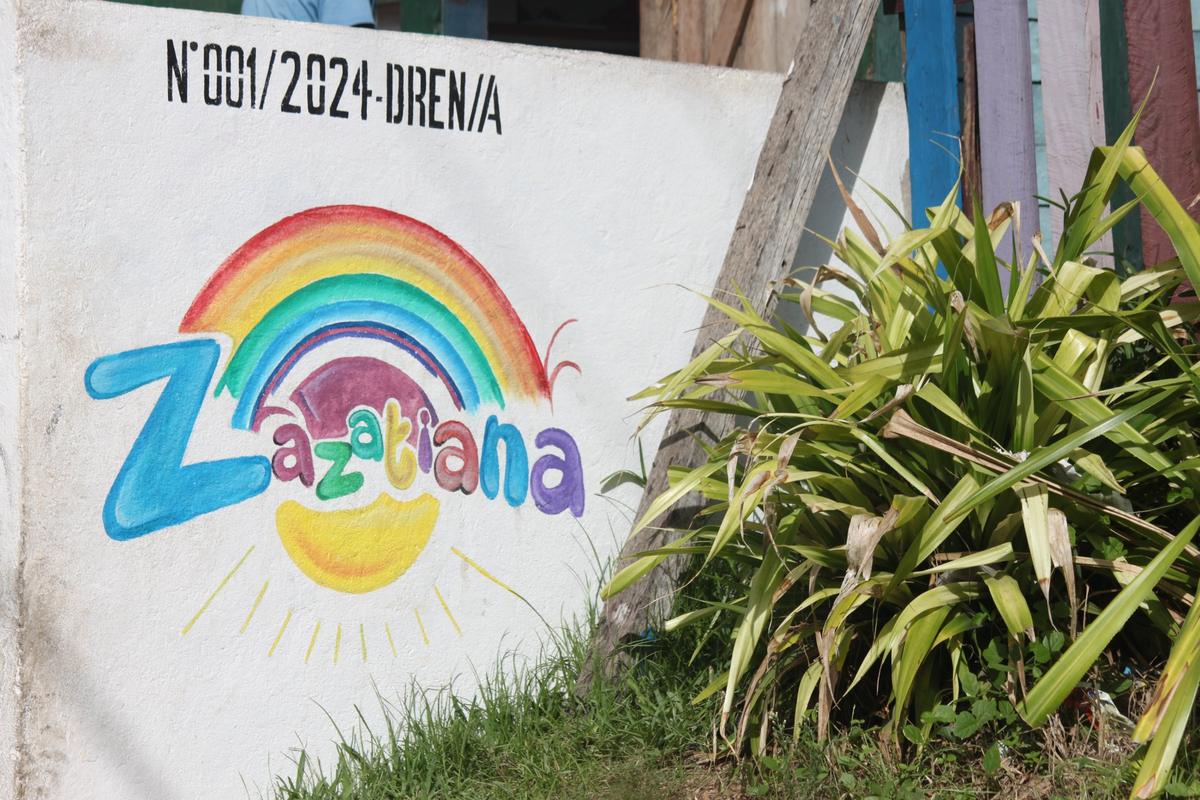
Pre-school (ages 3-5) remains very underdeveloped in the public sector in Madagascar, and the Anôsy Region is no exception. According to the Education Sector Plan, attending pre-school is one of the main factors in pupils' later success — its absence heavily penalises children in rural areas. On literacy, the figures are worrying: according to RGPH-3 (2018), 21% of Malagasy people nationally have no schooling. In Madagascar, the national literacy rate is estimated at 35.1% for those over 15 (ENSOMD 2012-2013), with wide disparities. In Anosy, EDBM reports 80.4% literacy in urban areas against only 27.4% in rural areas — one of the largest urban/rural gaps in the country. Targeted programmes (UNICEF, SEED Madagascar's Stelo project, Aide & Action) work on both fronts.

Lead(s) MEN — Communes — NGOs (UNICEF, SEED Madagascar, Aide & Action)
Scale Community centres and satellite schools
Area Urban neighbourhoods and rural villages
Period School year / short sessions
Educational dimension Enfants 3-5 ans · adultes & jeunes déscolarisés

Services and activities

  • Pre-school centres Early learning and preparation for CP for ages 3-5
  • Adult literacy Learning to read, write and do basic arithmetic
  • Evening classes For young drop-outs and working adults
  • Back to school Bridge to formal schooling for drop-outs

Social impact

27.4% rural literacy in Anosy — essential programmes, but far too small.

Source: EDBM Madagascar — Anosy Region / INSTAT RGPH-3

Vocational training
Technical & vocational education

Technical & vocational training (EFP, CFP)

Short, qualifying courses to help young people find work in the local job market.

Technical and vocational training is one of the seven official components of the Malagasy education system, alongside pre-school, primary, general secondary, higher education, literacy and civic education. In Fort-Dauphin, provision is built around public technical schools (EFP) and private or non-profit vocational training centres (CFP). The most common courses match local job opportunities: masonry, electrical work, carpentry, car mechanics, sewing, hotels and catering, freight forwarding & customs (linked to Ehoala port and QMM/Rio Tinto activities), and tourism. The World Bank stresses that the Malagasy education system “lacks sufficient means to equip young people with the skills they need for productive employment” — hence the strategic importance of vocational courses.

Lead(s) Ministry of Labour, Employment and Vocational Training (MTEFOP) — private operators
Scale Fort-Dauphin and a few main towns
Area Training centre in Taolagnaro
Period Short courses (6 months to 2 years) — CAP, BEP, construction
Educational dimension Helping young people aged 15-25 into work

Services and activities

  • Construction & building trades Masonry, electrical work, plumbing, carpentry
  • Mechanics & maintenance Car mechanics, welding, industrial maintenance
  • Hotels & catering Service, cooking, reception — tourism jobs
  • Freight forwarding & customs Dedicated course — Ehoala port and logistics

Social impact

A key link in reducing youth unemployment — capacity still limited compared with needs.

Source: Anôsy Region / World Bank — Education in Madagascar

Disclaimer: This page gives a summary overview of the education system in Anosy based on public sources (Anôsy Region, MEN, MESUPRES, INSTAT, World Bank, UNESCO IICBA, CONFEMEN/PASEC, SEED Madagascar, AEFE). Fees, timetables and enrolment conditions should always be checked directly with schools, as they change from one school year to the next.

School map

Map of schools
in Fort-Dauphin

Locate the main schools and colleges of Fort-Dauphin and the Anosy Region. Positions are approximate — always check exact contact details and enrolment hours locally.

Public (EPP, CEG, high school) Private & faith-based AEFE (French school) Higher education Rural literacy Vocational training
Education challenges

Six structural challenges
weighing on schooling in Anosy

Understanding these obstacles is essential for anyone wishing to act effectively in Anosy: NGOs, donors, corporate sponsors, twinned local authorities or simply parents.

Unequal geographical access

Many fokontany in Anosy still have no EPP, and 13 communes have no CEG. Children in isolated areas sometimes walk several kilometres to reach the nearest school, especially in Betroka district.

MEN · communes

Learning poverty

According to the World Bank (2019), 97% of 10-year-old Malagasy children are in “learning poverty”: unable to read a simple text. Fewer than a third of children entering CP reach CM2.

World Bank · UNESCO

Teacher shortage

There are not enough public teachers and they are poorly distributed because some communes are isolated. A large share of the teaching staff are FRAM teachers (recruited and paid by families), who are gradually being integrated into the civil service.

MEN · FRAM

Run-down infrastructure

Many school buildings are in a deplorable state, especially in isolated localities. Most community schools have no permanent buildings. Cyclones (Batsirai 2022, Freddy 2023) regularly make things worse.

MEN · BNGRC

Girls dropping out

Although girls initially have a slight advantage on entering primary school, drop-outs increase at the move from primary to secondary: early pregnancies, child marriages, domestic chores. SEED's Ready for Rights and UNICEF target this challenge.

UNICEF · SEED · NGOs

Hunger & malnutrition at school

Many children come to school without having eaten, which drastically reduces their ability to learn. The WFP/MEN school canteen programme reaches 160,000 children nationally — still far from meeting all of Anosy's needs.

WFP · MEN · ONN

Annual cycle

School calendar
and official exams

Following the national Malagasy calendar, the school year starts in early September and ends in early July. Official exams (CEPE, BEPC) take place in June and July. The risk of cyclones weighs on the 2nd term.

Jan
T2
Start of the 2nd term after the Christmas holidays · intensive learning
Feb
cyclones
Middle of the 2nd term · risk of cyclones (school closures)
Mar
mock exams
End of the 2nd term · mock CEPE and BEPC exams
Apr
Easter
Easter holidays — short break
May
T3
Start of the 3rd term · intensive revision
June
CEPE
National CEPE exam — end of primary
Jul
BEPC
BEPC exams · baccalaureate
August
holidays
Summer holidays · preparing enrolments
Sep
start
Official start of the school year · textbook distribution · canteens open
Oct
T1
1st term under way · in-service teacher training
Nov
councils
First class councils · risk of early drop-outs
Dec
Christmas
End of the 1st term · Christmas holidays · watch for the lean season
Busy period (active term, exams) In-between period School holidays
Players & partners

Who works for
education in Anosy?

Ministries, UN agencies, multilateral donors, English- and French-speaking NGOs: a dense ecosystem pooling expertise and resources to reduce learning poverty.

National supervising ministry

Ministry of National Education (MEN)

National supervisor of the education system. Represented locally by the Regional Directorate of National Education (DREN) Anosy in Fort-Dauphin, which runs the region's 794 EPP, 68 CEG and public high schools.

Higher education & research

MESUPRES — Higher education

Ministry of Higher Education and Scientific Research. Supervises IES Anôsy, CNTEMAD Taolagnaro and the two private institutes (paramedical, freight forwarding & customs).

Childhood & equity

UNICEF Madagascar

Pre-school, gender equity, teacher training, emergency school kits after disasters (cyclones). A key player in keeping girls in school in Anosy.

School canteens

WFP — World Food Programme

School canteens in state primary schools in partnership with MEN: 1,245 schools in 9 regions including Anosy; 160,000 pupils served, target 240,000.

Education policy

UNESCO IICBA

International Institute for Capacity Building in Africa. Support for teaching quality, training of decision-makers, education policies and comparative studies.

Donor & research

World Bank

Funding of education projects (PAEB, PAPSE) and diagnostic studies of the Malagasy education system. Originator of the “learning poverty” concept as applied to Madagascar.

Field NGO

SEED Madagascar

British-Malagasy NGO based in Fort-Dauphin for more than 20 years. Stelo (literacy), Magnampy (school kits) and Ready for Rights (keeping girls in school) projects.

Educational cooperation

AEFE — France

Agency for French Education Abroad. Educational supervisor of the École Primaire Française de Fort-Dauphin, awarding school grants to French pupils.

Practical tips

Good practice for
parents, pupils & new residents

Whether you are a parent, a student or involved in a school-support programme, here are a few practical pointers for navigating the education system in Anosy.

Enrolment: plan ahead for the new school year

  • Enrolment often closes as early as July at popular private schools
  • Prepare a birth certificate, health record and certificates
  • ID photos, school record book, proof of address
  • EPF: enquire directly at PO Box 187 614 Fort-Dauphin

Real cost: beyond “free” schooling

  • Public: supplies, uniform, FRAM contribution, school fund
  • Private: annual fees vary by school
  • WFP canteen in some EPPs — free for beneficiaries
  • AEFE grants possible for French pupils at the EPF

Language of instruction

  • Malagasy: main language of instruction in primary school
  • French: introduced gradually, predominant in secondary school
  • Good command of French = a strong factor in success
  • Libraries (Alliance française, SEED Stelo): well worth using

Getting involved: supporting a local school

  • Favour well-established NGOs (SEED Madagascar, Aide & Action)
  • Rather than spontaneous donations: textbooks, books, refurbished computers
  • WFP canteens: open to corporate sponsorship
  • School twinning: contact the DREN Anosy
Learn · Pass on · Succeed

Schooling in Anosy
is built together

From bush EPPs to the higher-education institute, from WFP canteens to faith schools, education in Anosy rests on an ecosystem in which every player counts. Grants, twinning, sponsorship, volunteering: your support can make a difference.

Continue exploring
local life in Anosy