
Subsoil resources
Non-renewableMineral sands (ilmenite, zircon, monazite) extracted industrially by QMM. Deposits concentrated along the coastal strip around Tôlanaro.
Examples: Ilmenite · Zircon · Monazite
Lying at the interface between the eastern rainforests and the southern spiny bush, Anosy has a rare diversity of natural resources. Managing them sustainably directly determines regional development and community resilience.
Mineral sands (ilmenite, zircon, monazite) extracted industrially by QMM. Deposits concentrated along the coastal strip around Tôlanaro.
Examples: Ilmenite · Zircon · Monazite
Surface water (Mandrare, Efaho, Manampanihy) and groundwater. A strategic resource under climate pressure and multiple uses.
Examples: Rivers · Aquifers · Rainfall
Forests (timber, NTFPs), fisheries (lobster, fish), endemic wildlife and plants. Community co-management (VOI/COBA) and protected areas ensure their renewal.
Examples: Forests · Fisheries · NTFPs
Sun (2,000 kWh/m²/year), water power (Mandrare and Efaho falls), sustainable biomass. Potential still largely untapped in Anosy.
Examples: Solar · Hydro · Biomass
Each card presents the nature of the resource, its geographical area, how it is exploited, its main uses and the related sustainability issues.

Anosy hosts one of the world's largest deposits of mineral sands — ilmenite (TiO₂), zircon and monazite, extracted by QMM since 2009.
The Mandena mine, operated by QIT Madagascar Minerals (80% owned by Rio Tinto and 20% by the Malagasy State), extracts ilmenite — the main source of titanium dioxide used in paints, paper, cosmetics and food. The alluvial deposits cover about 6,000 hectares of coastal sands across three sites: Mandena (active), Sainte-Luce and Petriky (in reserve). QMM also produces zirsill (ceramics, electronics) and monazite (rare earths). In 2019, production reached 461,800 tonnes of ilmenite and 28,500 tonnes of zircon (USGS report).
Balancing mining revenue (jobs, tax receipts) with the preservation of littoral forests — 3 IUCN V protected areas created as compensation (Mandena, Sainte-Luce, Petriky).
Source: Rio Tinto · USGS Mineral Industry Report · Wikipedia
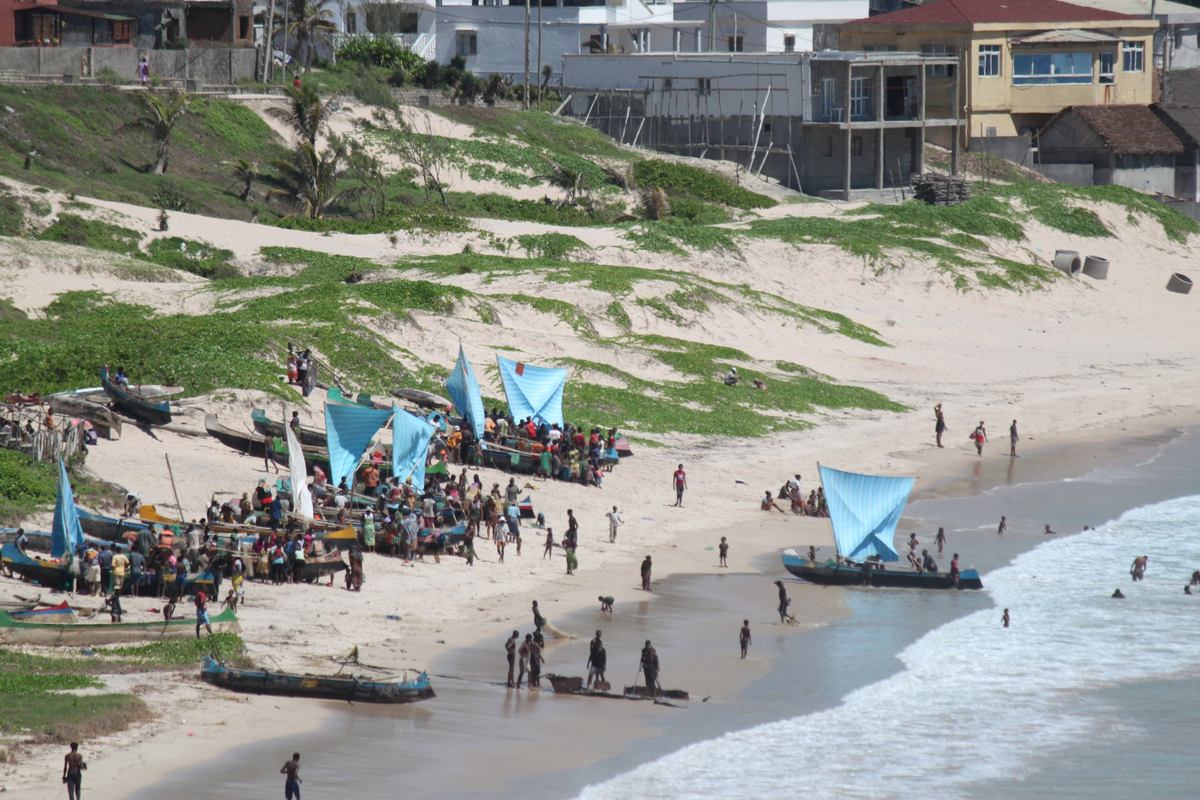
Anosy supplies almost half of the national spiny lobster catch — about 15,000 people live from this artisanal fishery.
The spiny lobster fishery (Palinurus delagoae and Panulirus homarus) is one of the main coastal economic activities of the south-east. According to SEED Madagascar and FAO, about 15,000 people in the region depend on it directly. The Oratsimba project (launched in 2013 by SEED Madagascar and IH.SM, with support from Blue Ventures and FAO) introduces locally managed marine areas (LMMAs), temporary closures and catch monitoring to restore overfished stocks. Artisanal fishing also targets coastal shrimp, reef fish, octopus and sharks (in decline).
Overfishing, minimum size not respected, catching egg-bearing females — hence the need for community co-management (LMMA) and seasonal closures.

Three major rivers shape Anosy — the Mandrare, Efaho and Manampanihy — supplying farming, drinking water, hydropower and ecosystems.
The Mandrare, about 250 km long, drains the largest basin in southern Madagascar and marks the boundary with the Androy region. The Efaho, smaller but highly strategic, is being studied for a water-transfer project to supply the people of Androy (a Deep South area hit by kere). The basin has severe low-water periods in the dry season, worsened by deforestation and climate change. Mini-dam projects run by UNESCO and NGOs (notably in the middle Mandrare) have allowed hundreds of farms to triple their annual harvests.
Worse low-water periods, sedimentation caused by erosion (tavy, charcoal), growing pressure of use. Shared governance by basin has yet to be organised.
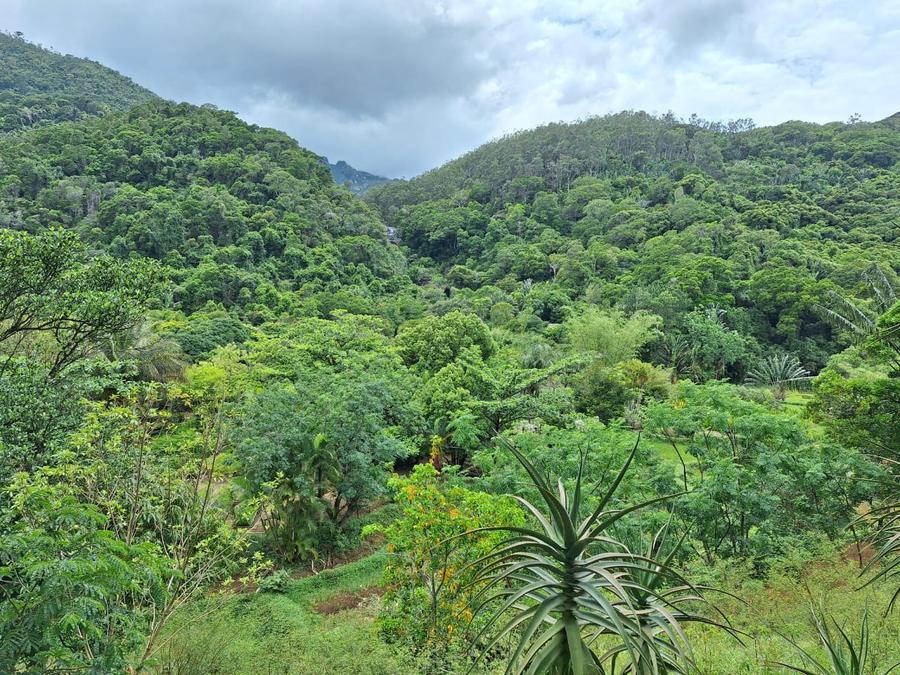
Anosy's remaining forests supply timber, charcoal, medicinal plants, honey and building materials — under constant strain.
Anosy's forest massifs (the Andohahela and Tsitongambarika rainforests, the littoral forests on sand at Mandena/Sainte-Luce/Petriky, the southern spiny bush) are both protected areas and sources of livelihood for neighbouring communities. Non-timber forest products (NTFPs) — wild honey, medicinal plants (Centella asiatica, Catharanthus roseus), fibres (raffia, screwpine for basketry), famine tubers — remain essential during the lean season. Wood fuel (charcoal, firewood) remains the leading cause of pressure on forests, followed by land clearing for farming (tavy).
Shrinking forest cover, illegal logging of precious woods, energy dependence on charcoal — hence the urgency of management transfers (VOI/COBA) and sustainable NTFP chains.

From industrial sisal in Amboasary-Sud to Tôlanaro's lychees, farming in Anosy combines subsistence food crops with export cash crops.
The Mandrare valley has about 30,000 hectares of sisal plantations (Agave sisalana), founded in 1936 by the de Heaulme family and still run by the HAH estate to produce fibre and rope. South-eastern Madagascar, including Anosy, supplies most of the lychees exported by Madagascar (a short season from November to December, mainly to Europe via Tamatave). Vanilla, cloves and coffee (in decline) complete the cash crops. Food farming relies on rain-fed rice, cassava, sweet potato, maize and beans — largely rain-fed practices vulnerable to drought.
Fragile soils, erosion, poor access to improved seed (only ~5%), climate vulnerability. Developing fair-trade value chains and agroecology are priorities.
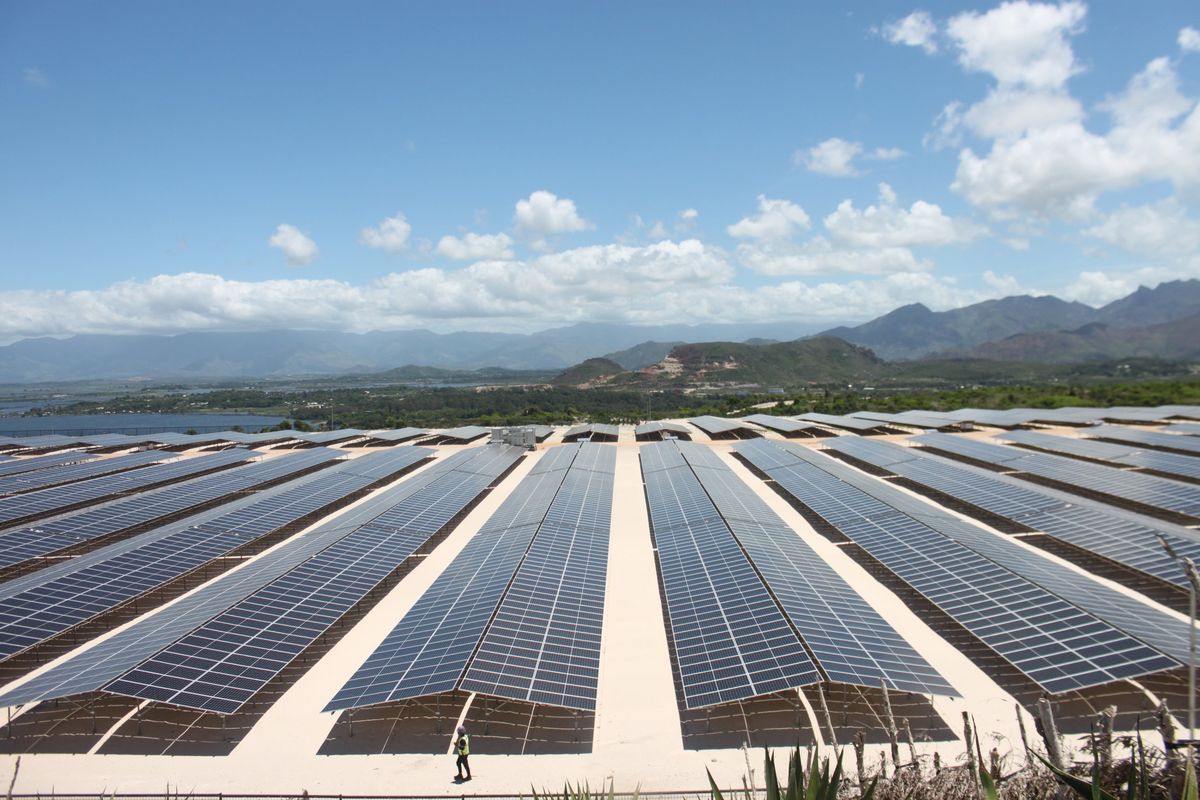
With 2,800 hours of sunshine a year and national hydropower potential estimated at 7,800 MW, Anosy has major energy assets that are still little used.
Madagascar enjoys solar irradiation of around 2,000 kWh/m²/year (World Bank, 2018) and national hydropower potential of 7,800 MW, most of which is still untapped. In Anosy, the rural electrification rate remains very low: decentralised electrification projects (Jiro-VE solar mini-grids, individual solar kits, village pico-hydro) are gradually taking over from the JIRAMA grid, which is limited to Tôlanaro. SEED Madagascar is rolling out Project Masoandro (solar equipment for rural schools). Sustainable biomass (improved stoves, biogas) is a complementary lever to reduce dependence on charcoal.
Low rural electrification rate (< 20%), initial investment cost, maintenance and local training — donor support (World Bank, EU, AFD) is essential.
Note: Production volumes and economic figures change every year. The data presented are based on reference public sources (USGS, FAO, World Bank, NGO reports). For the latest statistics, consult the official reports of the Ministry of Mines, the Ministry of Fisheries and INSTAT.
Locate the main extraction areas of Anosy's resources, colour-coded by sector. Click a marker to open the detailed card.
Anosy's natural resources follow a marked seasonal rhythm: opening/closing of the lobster fishery, the lychee season at the end of the year, food harvests, low river levels.
Resource governance involves a range of public, private, community and international actors — how well they coordinate determines the sustainability of the regional model.
Ministries of Mines, Fisheries, Agriculture, Water and the Environment (MEDD). They set permits, quotas and royalties. The region has decentralised offices in Tôlanaro.
The region's leading mining operator. A joint venture between Rio Tinto and the Malagasy State. Has operated Mandena since 2009 and manages 3 IUCN V protected areas as environmental compensation.
SEED Madagascar (lobster, forestry, energy), Asity Madagascar (forests), WWF, AVSF (fair-trade chains), Jiro-VE (solar) — technical support, funding, organising sustainable value chains.
Vondron'Olona Ifotony — village associations receiving transfers of natural-resource management. A pillar of forest and fisheries co-management in Anosy.
HAH Group (Amboasary-Sud sisal), lychee/vanilla exporters, farmers' cooperatives (FIFATA, AVSF). An economic fabric structuring cash crops.
World Bank, EU, AFD, IFAD, FAO, UNESCO, USAID — funding for water, resilient agriculture, renewable energy and sustainable resource management.
Anosy's natural resources face overlapping pressures: climate change, population growth, industrial extraction, export demand. Four levers of action structure the transition.
Knowing Anosy's natural resources better opens the way to responsible partnerships, sustainable investment and inclusive economic value chains — for the benefit of future generations.